|
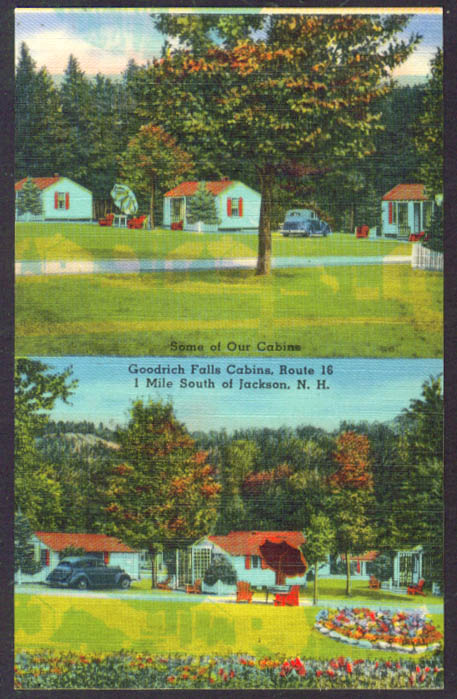
Goodrich Falls
|
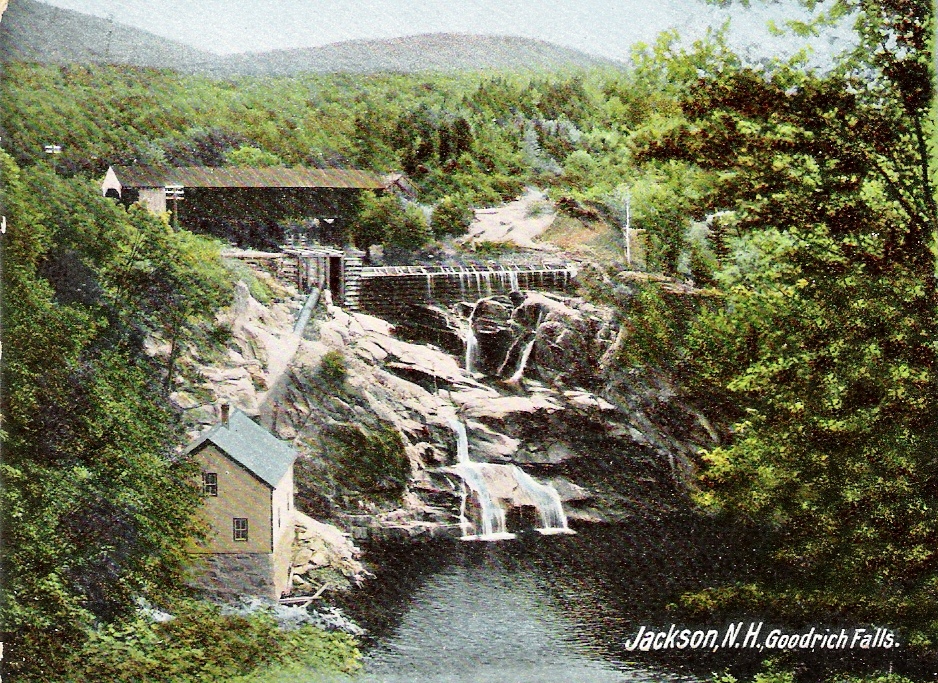 Click the image for a larger version. Whoever did this picture thought they were in Jackson. 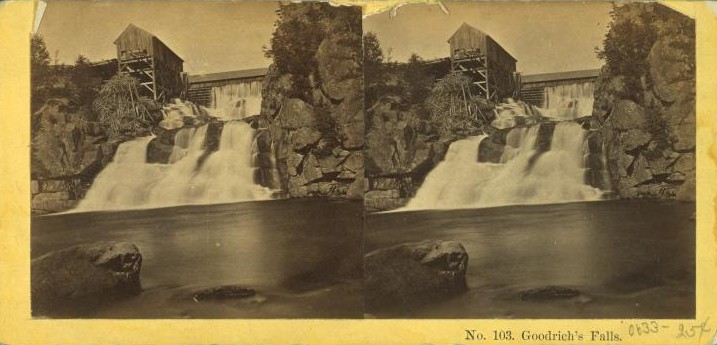 Early Stereogrpahic Slide of Goodrich Falls. Courtesy of David Emerson, Conway Historical Society Curator 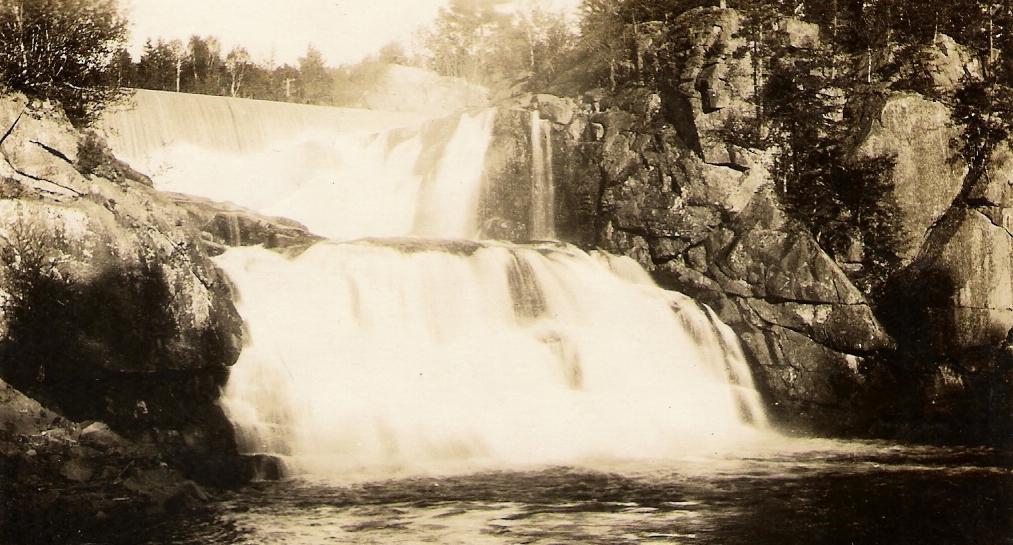 Click
on this picture for a large size Click
on this picture for a large size |
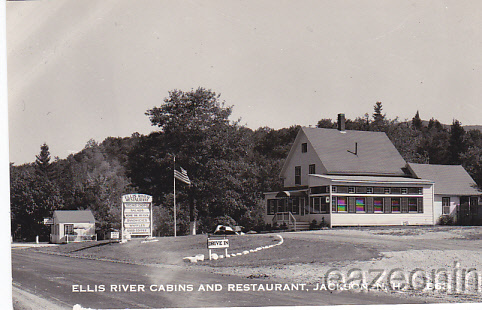
Your Information Could Be Here ! Do you know any details of the Ellis River Cabins? Or any other information about early Bartlett? Share what you know, many would appreciate it. You can be anomous if you prefer. Tell us what you know here
Traditional
stereoscopic photography consists of creating a 3-D illusion starting from a pair of 2-D images. When looking at a
into the twentieth century. Traveling sales agents sold stereographs, as did novelty stores, book stores, drug stores and catalogs. 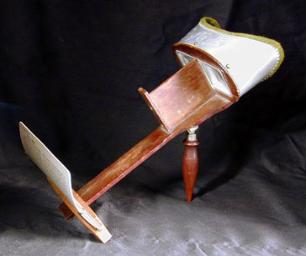 B.W. Kilburn & Co. was started in Littleton, NH in 1876, by the Kilburn Brothers, Benjamin West and Edward Kilburn, and became one of the major publishers of sterographs at the turn of the century, producing many scenes of the White Mountains. If you should have some of these photographic images, with no way to view them in 3-D, the Society has available a stereoscope for your use. Come visit us at the Society office! Click Pictures for Larger Size. 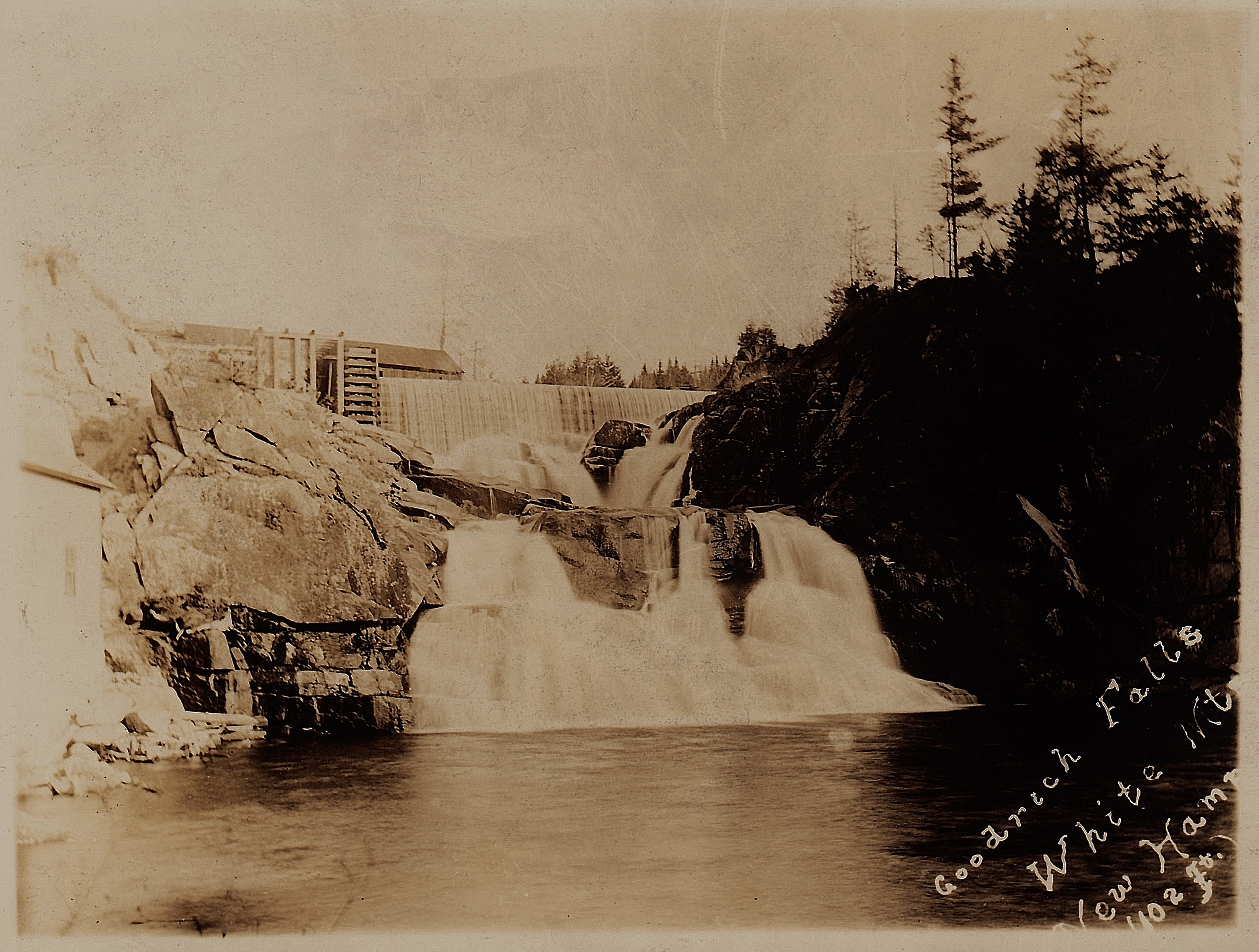
Villages Menu
       
A Case of Inhospitable Hospitality?
THE HEART of the WHITE MOUNTAINS Their Legend and Scenery By Samuel Adams Drake 1882 Pg 58-61 Three miles below the village of Bartlett we stopped before a farmhouse, with the gable-end toward the road, to inquire the distance to the next tavern, where we meant to pass the night. A gruff voice from the inside growled something by way of reply; but as its owner, whoever he might be, did not take the trouble to open his door, the answer was unintelligible. “The Churl!” muttered the colonel. “I have a great mind to teach him to open when a gentleman knocks.” “And I advise you not to try it,” said the man from the inside. The one thing a Kentuckian never shrinks from is a challenge. He only said, “Wait a minute,” while putting his broad shoulder against the door; but now George and I interfered. Neither of us had any desire to signalize our entry in the village by a brawl, and after some trouble we succeeded in pacifying our fire- eater with the promise to stop at this house on our way back. “I shall know it again,” said the colonel, looking back, and nibbling his long mustache with suppressed wrath; “something has been spilled on the threshold-- something like blood.” We laughed heartily. The blood, we concluded, was in the colonel’s eyes. Some time after nightfall we arrived in the village, having put thirteen miles of road behind us without fatigue. Our host received us with a blazing fire -- what fires they do have in the mountains, to be sure! -- a pitcher of cider, and the remark, “Don’t be afraid of it, gentlemen.” All three hastened to reassure him on this point. The colonel began with a loud smack, and George finished the jug with a deep sigh. “Don’t be afraid of it,” repeated the landlord, returning presently with a fresh pitcher. “There are five barrels more like it in the cellar.” “Landlord,” quoth George, “let one of your boys take a mattress, two blankets, and a pillow to the cellar. I intend to pass the night there.” “I only wish your well was full of it,” said the colonel, taking a second put at the jug, and making a second explosion with his lips. “Gentlemen,” said I, “we have surely entered a land of milk and honey. “You shall have as much of both as you desire,” said our host, very affably. “Supper is ready, gentlemen.” After supper a man came in for whom I felt, upon the instant, one of those secret antipathies which are natural to me. The man was an utter stranger. No matter: the repugnance seized me all the same. After a tour of the tap-room, and some words with our landlord in an undertone, the stranger went out with the look of a man who had asked for something and had been refused. “Where have I heard that man’s voice?” said the colonel, thoughtfully. Our landlord is one of the most genial to be found among the mountains. While sitting over the fire during the evening, the conversation turned upon the primitive simplicity of manners remarked among mountaineers in general; and our host illustrated it with this incident: “You noticed, perhaps, a man who left here a few moments ago?” he began. We replied affirmatively. It was my antipathy. “Well, that man killed a traveler a few years back.” We instinctively recoiled. The air seemed tainted with the murderer’s presence. “Yes; dead as a mutton, “continued the landlord, punching the logs reflectively, and filling the chimney with sparks. “The man came to his house one dark and stormy night, and asked to be admitted. The man of the house flatly refused. The stranger pleaded hard, but the fellow ordered him away with threats. Finding entreaties useless, the traveler began to grow angry, and attempted to push open the door, which was only fastened by a button, as the custom is. The man of the house said nothing, but took his gun from a corner, and when the intruder crossed the threshold he put three slugs through him. The wounded man expired on the threshold, covering it with his blood.” “Murdered him, and for that? Come, come, you are joking!” ejaculated George, with a half smile of incredulity. “Blowed him right through, just as I tell you,” reiterated the narrator, without heeding the doubt George’s question implied. “That sounds a little like Old Kentuck,” observed the colonel, coolly. “Yes; but listen to the sequel, gentlemen,” resumed the landlord. “The murderer took the dead body in his arms, finding, to his ‘horror, that it was an acquaintance with whom he had been drinking the day before; he took up the body, as I was saying, laid it out upon a table, and then went quietly to bed. In the morning he very honestly exhibited the corpse to all who passed his door, and told his story as I tell it to you. I had it from his own lips.” “That beats Kentucky,” asseverated the colonel. For my own part, I believed the landlord; “I was never there in my life; but I do know that, when the dead man was buried, the man who killed him went to the funeral like any curious or indifferent spectator. This was too much. George rose from his chair, and began to be interested in a placard on the wall. “And you say this happened near here?” he slowly inquired; “perhaps, now, you could show us the very house?” he finished, dryly. “Nothing easier. It’s only three miles back on the road you came. The blood-stain is plain, or was, on the threshold.” We exchanged glances. This was the house where we halted to inquire our way. The colonel’s eyes dilated, but he said nothing. “But was there no trial?” I asked. “Trial? Oh yes. After several days had run by, somebody thought of that; so one morning the slayer saddled his horse and rode over the county-seat to inquire about it. He was tried at the next session, and acquitted. The judge charged justifiable homicide; that a man’s house is his fort; the jury did not leave their benches. By-th-by, gentlemen, that is some of the man’s cider you are drinking.” I felt decided symptoms of revolt in my stomach; George made a grimace, and the colonel threw his unfinished glass in the fire. During the remainder of the evening he rallied us a good deal on the subject of New England hospitality, but said no more about going back to chastise the man of the red house. [The sequel to this strange but true story is in keeping with the rest of its horrible details. Perpetually haunted by the ghost of his victim, the murderer became a prey to remorse. Life became unsupportable. He felt that he was both shunned and abhorred. Gradually he fell into a decline, and within a few years from the time the deed was committed he died.] |